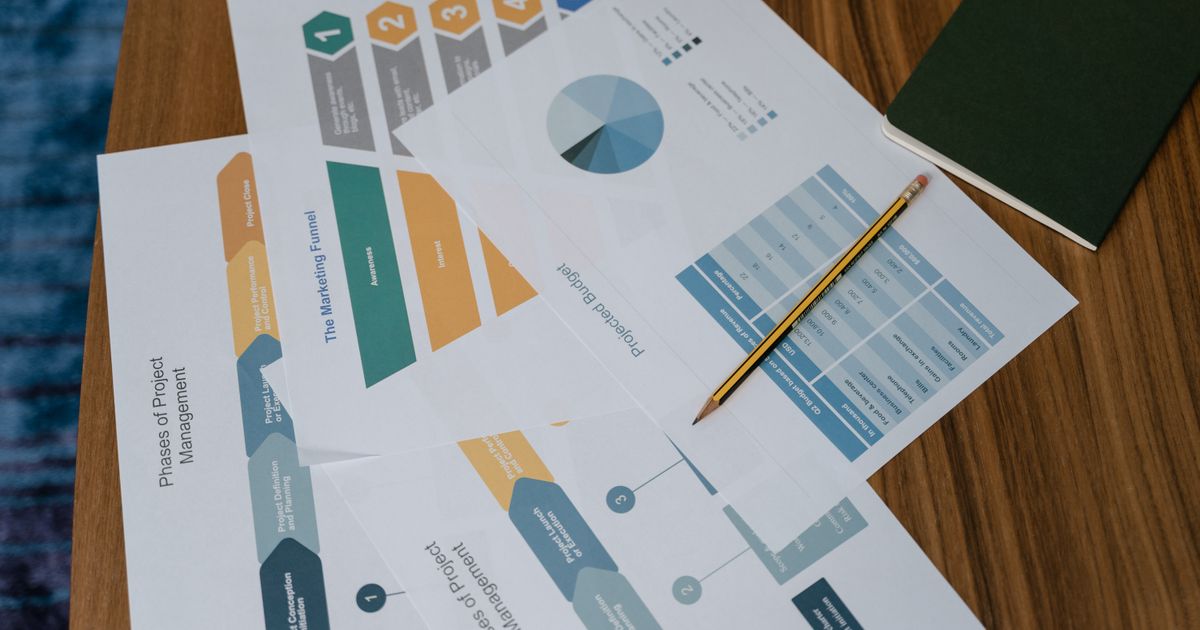
Most SaaS companies produce blog content without connecting a single post to revenue. The disconnect between publishing activity and pipeline results keeps marketing teams stuck reporting on traffic while leadership asks about leads. A structured SaaS content strategy solves this by mapping every content asset to a funnel stage, a buyer intent, and a measurable business outcome.

SaaS content strategy is a structured approach to planning, producing, and distributing content that moves prospects from awareness through evaluation to purchase. Unlike media publishing, where traffic is the product, SaaS content must connect to product adoption and revenue. A well-built strategy maps content types to funnel stages, aligns editorial calendars with product launches, and measures performance in pipeline contribution rather than vanity metrics.
What Makes SaaS Content Strategy Different from General Content Marketing
SaaS content strategy differs from general content marketing in one fundamental way: the audience is making a recurring purchase decision. Subscription models mean content must support not just acquisition but retention and expansion. A blog post that attracts a visitor has limited value unless the content experience guides that visitor toward understanding why the product solves their specific problem.
The Recurring Revenue Lens
Content for SaaS companies serves multiple lifecycle stages simultaneously. Acquisition content brings new prospects into the funnel. Onboarding content reduces time-to-value for new customers. Retention content highlights underused features and new releases. Expansion content helps existing customers see use cases that justify upgrading.
The following table maps content purposes to business metrics across the SaaS lifecycle.
| Lifecycle Stage | Content Purpose | Primary Metric |
|---|---|---|
| Acquisition | Attract qualified visitors | Organic traffic to signup ratio |
| Activation | Reduce time-to-value | Feature adoption rate |
| Retention | Prevent churn | Content engagement before renewal |
| Expansion | Upsell and cross-sell | Upgrade-attributed content touches |
| Advocacy | Generate referrals | Shared content and case study participation |
Mapping content to lifecycle stages prevents the common mistake of producing only top-of-funnel blog posts while ignoring the content that supports revenue growth.
Content vs. Product-Led Approaches
Content-led growth relies on editorial assets (blog posts, guides, reports) to attract and educate prospects. Product-led SEO relies on the product itself (free tools, templates, community features) to generate organic visibility. Most successful SaaS companies blend both approaches, using content to capture informational queries and product pages to capture transactional ones.
TOFU Content: Building Awareness and Topical Authority
Top-of-funnel content for SaaS targets audiences who have a problem but may not know a solution category exists. TOFU content is educational, broadly relevant, and designed to introduce your brand as a credible source on the topic.
Content Types That Work at the Top of Funnel
Problem-awareness blog posts perform well at TOFU because they match how prospects search before they know product categories. “How to reduce customer churn” captures a broader audience than “best churn prediction software”. Both queries matter, but they serve different funnel positions.
The table below shows TOFU content types ranked by typical effort and organic reach for SaaS companies.
| Content Type | Production Effort | Organic Reach Potential | Shelf Life |
|---|---|---|---|
| Educational blog posts | Low-Medium | High | 12-18 months |
| Industry benchmark reports | High | Very High | 6-12 months |
| Glossary and definition pages | Low | Medium | 24+ months |
| Podcast transcripts | Medium | Medium | 12+ months |
| Infographics with embed codes | Medium | High (with outreach) | 12-18 months |
Glossary pages, while low-effort individually, build topical authority across a subject area when structured as a hub with interlinked definitions.
Keyword Selection for TOFU
SaaS keyword research at the top of funnel should focus on problem-oriented and education-oriented queries. Queries starting with “what is”, “how to”, and “why does” signal early-stage research. These keywords tend to have higher volume but lower conversion intent, so measuring TOFU strictly on conversions misunderstands its role.
Building a consistent publishing rhythm for TOFU content signals freshness to search engines and keeps the brand visible across a range of related queries. Publishing cadence matters as much as individual post quality, because topical authority compounds over time.
MOFU Content: Nurturing Consideration and Evaluation
Middle-of-funnel content for SaaS targets prospects who understand their problem and are evaluating solution categories. MOFU content positions the product as a credible option by connecting features to outcomes.
Comparison and Alternative Pages
Comparison pages (“Product A vs. Product B”) and alternative pages (“Best alternatives to Product X”) capture high-intent queries from prospects actively evaluating options. These pages require honest, balanced analysis to build trust. One-sided comparisons that trash competitors damage credibility.
Use Case and Industry Pages
Use case pages map product capabilities to specific job functions or industries. “CRM for real estate agents” or “project management for marketing teams” captures segmented search demand that generic product pages miss. Each use case page becomes a landing page for a distinct audience segment.
Connecting MOFU pages to the broader content strategy for SEO ensures these pages receive internal link equity from TOFU educational content rather than existing in isolation.
Webinars and Demo Content
Recorded webinars and product demo videos, when transcribed and optimized, serve dual purposes: they capture long-tail search queries and provide sales enablement assets. The transcript page ranks for niche queries while the video itself supports prospects who prefer visual learning.
BOFU Content: Converting Pipeline to Revenue
Bottom-of-funnel content targets prospects ready to buy. BOFU content removes final objections, provides social proof, and makes the path to purchase frictionless.
Case Studies and Social Proof
Case studies are the highest-converting content type in B2B SaaS. Prospects at the decision stage want evidence that the product works for companies similar to theirs. Structuring case studies around challenge, solution, and measurable results provides the narrative framework that procurement teams need.
The following table compares BOFU content types by their typical influence on deal velocity.
| BOFU Content Type | Influence on Deal Velocity | Production Complexity |
|---|---|---|
| Customer case studies | Very High | High (requires customer participation) |
| ROI calculators | High | Medium (requires accurate modeling) |
| Implementation guides | Medium | Medium |
| Security and compliance docs | High (for enterprise) | High |
| Pricing comparison tables | Very High | Low |
ROI calculators that allow prospects to input their own numbers create personalized value propositions at scale.
Integration Pages
Integration pages (“Connect Product X with Salesforce”) target searches from prospects evaluating ecosystem fit. These pages serve both SEO and product marketing by demonstrating that the product works within existing tech stacks.
Building and Managing an Editorial Calendar for SaaS
Editorial calendar management for SaaS content requires balancing three competing priorities: SEO-driven content that targets specific keywords, product marketing content that supports launches and updates, and thought leadership content that builds brand authority.
Cadence and Resource Allocation
Publishing frequency depends on company stage and resources. Early-stage SaaS companies benefit from focusing on 2-3 posts per week across a narrow topical cluster rather than spreading thin across many topics. The depth-first approach builds topical authority faster than breadth-first publishing.
A practical split for a SaaS company with moderate content resources: 50% TOFU educational content, 30% MOFU comparison and use case content, 20% BOFU case studies and conversion content. Adjusting this ratio based on where the funnel leaks most ensures content investment matches business need.
Aligning Content with Product Roadmap
Product launches create content opportunities that pure SEO planning misses. A new feature release generates material for a product update blog post, an updated comparison page, a new use case page, and refreshed documentation. Coordinating with product teams ensures the editorial calendar captures these windows.
Measuring SaaS Content Performance Beyond Traffic
Content performance measurement for SaaS must connect to revenue metrics to justify ongoing investment. Tracking pageviews alone obscures whether content contributes to pipeline.
Metrics by Funnel Stage
TOFU metrics include organic sessions, keyword rankings, and new user acquisition. MOFU metrics include content-assisted conversions, email signups, and demo requests from content pages. BOFU metrics include content touches in closed-won deals, deal velocity for content-engaged prospects, and customer acquisition cost by channel.
Connecting content analytics to CRM data through UTM parameters and first-touch or multi-touch attribution models reveals which content assets contribute to revenue. Without this connection, content teams optimize for traffic while the business needs pipeline.
An effective SEO strategy for SaaS treats content as a revenue channel with measurable returns, not a cost center producing blog posts. The measurement framework should be established before scaling content production, not after.
Content Refresh and Decay Management
SaaS content decays faster than evergreen content in other industries because products change, competitors launch new features, and market positioning shifts. Quarterly content audits that flag posts with declining traffic or outdated product information keep the content library current and ranking.
Turning Content Strategy Into a Revenue System
SaaS content strategy only works when every asset connects to the buyer journey and gets measured against pipeline, not pageviews. The companies that treat content as a revenue channel, with funnel-stage mapping, editorial discipline, and CRM-connected attribution, outpace competitors who publish without a system. If your content program needs a structured framework tied to business outcomes, Want a strategy built for your SaaS growth stage? Book a free call or start with the SEO Growth Audit.
Why Most SaaS Content Calendars Produce Nothing
The typical SaaS content program is busy, well-organised, and commercially irrelevant.
- The calendar is the strategy – Cadence becomes the KPI. Four posts a month get shipped regardless of whether any of them serve a buying decision.
- Written by people who have never spoken to a customer – Content produced from keyword tools rather than sales calls reads exactly like it. Your sales team already knows the objections that stall deals. That is the content brief.
- No distribution – Published, tweeted once, abandoned. A page with no links and no mentions is not competing, it is filed.
- Top of funnel by default – TOFU is easy to write and easy to rank for, which is exactly why it is crowded and cheap. It is also the traffic least likely to buy.
The test I apply: would your best sales rep send this to a prospect who is stalling? If not, it will not create pipeline either.
FAQ
What content mix generates the fastest pipeline for early-stage SaaS?
Early-stage SaaS companies should allocate 40% of content resources to MOFU comparison and alternative pages, 30% to BOFU case studies and ROI content, and 30% to TOFU educational posts within a single topical cluster. Comparison pages consistently generate pipeline disproportionate to their volume because they capture prospects already evaluating solutions. Limiting TOFU to one focused cluster prevents resource dilution across topics that lack conversion potential.
How does publishing frequency affect SaaS content performance?
Publishing frequency influences topical authority signals more than individual post performance. Two to three well-researched posts per week within a defined cluster build authority faster than five shallow posts scattered across unrelated topics. B2B SaaS SEO programs that maintain consistent weekly cadence for 6+ months see compounding organic traffic growth that sporadic publishing cannot replicate. The key constraint is editorial quality, not publication volume.
What attribution model best measures SaaS content ROI?
Position-based attribution (40% first touch, 40% last touch, 20% distributed) captures content’s dual role in discovery and conversion assist. Connect content engagement data from Google Analytics to CRM pipeline records using UTM parameters and form-fill tracking. Calculate content ROI by dividing organic-attributed pipeline value by total content investment (writers, tools, SEO, distribution). Companies using multi-touch models typically find content influences 2-3x more revenue than last-touch models suggest.
Should SaaS companies gate educational content for lead capture?
Gating educational content sacrifices organic visibility and backlink potential for a marginal increase in email captures. Ungated blog posts and guides rank in search results, earn backlinks from other publications, and build topical authority that benefits the entire domain. Reserve gating for high-value assets like benchmark reports, proprietary templates, and interactive tools where the perceived value justifies the email exchange. Companies that shift from gated blogs to ungated content typically see 3-5x increases in organic traffic within six months.
How should SaaS content strategy differ between SMB and enterprise products?
SMB SaaS content prioritizes self-serve conversion paths: free trial CTAs, product-led landing pages, and short-form comparison content that matches quick buying cycles. Enterprise SaaS content requires depth: long-form guides, multi-stakeholder use case pages, security and compliance documentation, and analyst-grade research that procurement committees reference. The content calendar should reflect the sales cycle length, with SMB programs optimizing for volume and speed while enterprise programs optimize for authority and comprehensiveness.